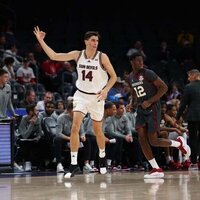



PHOENIX (CN) - Arizona State basketball coach Bobby Hurley says he was frustrated with former athletic director Ray Anderson for not escalating a sexual harassment report against three women, including his wife.
Hurley testified Wednesday in a federal trial in which David Cohen claims he was fired from his job as senior associate athletic director in retaliation for reporting the incident to Anderson.
At a basketball game in March 2019, Cohen says a donor named Bart Wear touched Cohen's wife Kathy on the breasts, and also inappropriately touched Leslie Hurley and Lindsey Wood, wife of assistant coach Ben Wood.
"Dave went to the mat to try and get this thing handled, and I know because of that, that was a big reason why he no longer works at ASU," Hurley told a panel of eight jurors, now tasked with deciding whether ASU rightfully fired Cohen in August 2019.
Hurley said he spoke with Anderson on the phone after learning of Wear's behavior, and Anderson downplayed the situation. He said Anderson called the behavior a "two or three out of 10" on a scale of sexual harassment.
"If it were your wife, you wouldn't rate it so low," he recalled telling Anderson at the time.
Hurley said he had a great relationship with Cohen, and that Cohen did his job well and supported the basketball team.
"I would have fought for him to stay on with me," he said.
But Anderson and the university contend that Cohen had been slacking in his other responsibilities and that his aggressive, sometimes angry demeanor was not a cultural fit for the program. Hurley admitted he wouldn't know anything about Cohen's job performance outside of basketball.
"David Cohen got fired because he was insubordinate," defense attorney Robert McKirgan said in his closing argument, referring to Cohen's negative reaction to being demoted on the chain of command a month before he was fired.
In the six-day trial, the university's defense team has dwelled on a $690,000 check intended for ASU that Cohen deposited into his own bank account in 2018 and held for a month before returning the full amount. McKirgan told the jury that Cohen likely purchased something with the money, or invested it with the goal of profiting off of ASU.
But Anderson, who directly fired Cohen, said last week that he wasn't aware of the check mixup. ASU only became aware in October 2019, after Cohen had already been placed on administrative leave and before he was officially terminated from the payroll in December.
Jury instructions ask the jurors to decide whether ASU would have fired Cohen for the ticket scandal if the school was aware earlier.
The defense also claims that Cohen violated the university's Title IX policy by reporting the incident to his supervisor rather than directly to the Title IX coordinator.
"It would be a policy violation not to report it to the right office," former Title IX coordinator Jodie Preudhomme testified Wednesday.
Michael Perez, representing Cohen, reminded Preudhomme that she said in her deposition that reporting an incident to a supervisor would satisfy Cohen's reporting requirements. Preudhomme said that's true.
"Dave Cohen spent this entire trial blaming Ray Anderson for what he should have done himself," McKirgan told the jury, reasoning that Cohen was never engaged in protected activity because he never properly reported the harassment.
Anderson reported the incident to no one until after he fired Cohen.
"You want to talk about waiting?" plaintiff attorney Jeff Feasby said in his closing. "We have Mr. Anderson, who waited five months before reporting."
Anderson admitted on the stand last week that it was a mistake not to tell Cohen to report the incident to Title IX, and that it was a mistake to take Wear on a golf trip weeks after he learned of Wear's behaviors.
"Those mistakes ultimately cost Mr. Cohen his job," Feasby said.
McKirgan said the behavior described to Anderson was different than what Cohen now describes, which is why Anderson didn't react as quickly. Still, he clarified that how Anderson handled the situation is irrelevant to the jury's decision.
"The plaintiff doesn't win by convincing you that Ray Anderson was delayed in acting on the Bart Wear allegations," he said.
Rather, he said the ultimate issue is whether Cohen's termination was because of the report, which McKirgan assured the jury it was not.
The case is now in the hands of the jury, which began deliberating Wednesday afternoon.
On Thursday, the parties will offer expert testimony on how much Cohen should be awarded in damages, if the jury finds in his favor.
Source: Courthouse News Service