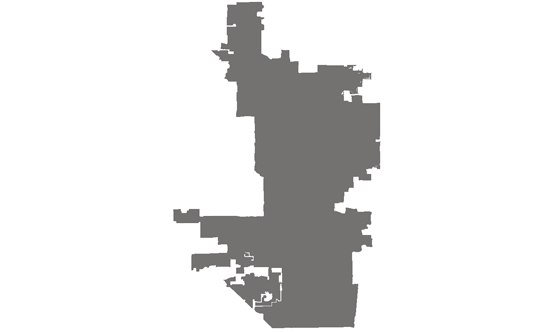



WASHINGTON (CN) - The state of Arizona sued the U.S. House of Representatives on Tuesday over Speaker Mike Johnson's continued refusal to swear in newly elected Democrat Adelita Grijalva, arguing that the top congressional Republican is depriving nearly one million Arizonans of elected representation.
Arizona Attorney General Kris Mayes filed the lawsuit in the U.S. District Court for the District of Columbia and named House Clerk Kevin McCumber and Sergeant at Arms William McFarland as defendants, along with the House of Representatives as a whole.
On Sept. 23, Grijalva was elected in a special election to succeed her father Ral Grijalva, who died from lung cancer on March 13, and is meant to serve out the rest of her father's term through 2026.
However, Johnson has refused to swear Grijalva in since her election, maintaining that he will do some when the House returns to a legislative session. Johnson dismissed lawmakers on Sept. 19 after passing a clean resolution to fund the government - which did not pass the Senate, resulting in ongoing government shutdown.
Grijalva and a growing number of congressional Democrats have argued Johnson's true reasoning lies in Grijalva's pledge to be the deciding vote on a petition that would force a vote demanding the White House release the so-called Epstein files. The petition currently sits at 217 of 218 required signatures.
"Speaker Johnson's obstruction has gone far beyond petty partisan politics - it is an unlawful breach of our Constitution and the democratic process," Grijalva said in an emailed statement. "The voters of southern Arizona made their choice, yet for four weeks, he has refused to seat a duly elected member of Congress - denying southern Arizonan its constitutional representation."
Mayes says that the suit challenges Johnson's position that he can deny Grijalva her rightful office by keeping the House out of "regular session."
"If the Speaker were granted that authority, he could thwart the peoples' choice of who should represent them in Congress by denying them representation for a significant portion of the two-year term provided by the Constitution," Mayes argues. "Fortunately, the Constitution does not give that authority to the speaker or anyone else."
Mayes asserts that the Constitution does not specify who needs to administer a representative's oath of office, simply that they must take one, and that Johnson could designate someone to administer it.
She is requesting a federal judge issue a declaratory judgment that Grijalva "shall be deemed a Member of the House of Representatives" once she has taken the oath and if Johnson still refuses, "the oath may be administered to Ms. Grijalva by any person authorized by law to administer oaths."
When asked for comment Tuesday, Johnson called Mayes' lawsuit "patently absurd."
"We run the House, she has no jurisdiction," Johnson said. "She's looking for national publicity, apparently she's gotten some of it, but good luck with that."
In the suit, Mayes argues that Johnson had seemingly reneged on his initial Oct. 7 position that Grijalva could take her oath of office as soon as she wanted, despite Grijalva repeatedly traveling to Washington for that explicit purpose.
Mayes noted that Johnson has been on Capitol Hill throughout October and has not specified why he or a designee cannot administer the oath to Grijalva, nor has he provided a valid reason for refusing to promptly seat her.
"Instead, on information and belief, Speaker Johnson wishes to delay seating Ms. Grijalva to prevent her from signing a discharge petition that would force a vote on the release of the Epstein files and/or to strengthen his hand in the ongoing budget and appropriations negotiations," Mayes said.
Johnson has also pointed to the government shutdown as reason for the delay, seeking to place the blame on Senate Democrats and further suggesting that the delay was necessary to give Grijalva "pomp and circumstance" for her swearing-in, despite Grijalva's statements dismissing the need for the ceremony.
Mayes argues that every time there's been a special election during Johnson's tenure, the winner has been "sworn in immediately upon unofficial notification of the results."
Representatives Celeste Maloy of Utah, Vince Fong of California, Jimmy Patronis and Randy Fine of Florida and James Walkinshaw of Virigina - all Republicans but for Walkinshaw - were sworn in, at most, eight days after their special elections.
Johnson has referred to a "[Nancy] Pelosi precedent" regarding Louisiana Republican Julia Letlow, who succeeded her husband and Representative-elect Luke Letlow following his death in December 2020 and was sworn in on April 14, 2021.
In a footnote, Mayes noted that then-Speaker Pelosi communicated with Letlow immediately after her election and scheduled the swearing in for April at Letlow's request.
"Ms. Grijalva would be delighted if Speaker Johnson would contact her to commit to a mutually agreeable time, as Speaker Pelosi did for Dr. Letlow," Mayes wrote.
Source: Courthouse News Service